CAE Tailwinds Are Creating a Development Bottleneck: What’s the Solution?
The growth of the CAE industry is undeniable. The value of CAE is becoming increasingly clear, technological innovations are increasing, cloud adoption continues to expand, and simulation is being used earlier and more comprehensively across industries. While these tailwinds paint a picture of growth, they are forcing CAE vendors to rebuild and reimagine their platforms in new ways.
Engineering teams building CAE applications are being asked to deliver more capabilities, support broader and more complex workflows, and move faster than ever. For developers, the result is a demand for next-generation simulation software built from the ground up to support these needs, and development teams are struggling to meet this demand.
Here, we will explore some of those tailwinds (and their mitigating headwinds), discuss how these changes are challenging CAE application developers, and discuss how modular external capabilities may help some teams.
The Many Tailwinds Fueling CAE Growth
First, we will cover the wide range of factors that combine to make the CAE and simulation application markets such a lucrative place for developers in 2026. While CAE has been growing at a strong pace since it became technically feasible, new technologies and industry landscapes are creating new opportunities for simulation workflows.
Capitol Spend on CAE is Increasing
IT spending has been and is continuing to rise, giving global engineering organizations room to invest in their platforms. Cloud native applications are seeing similar increases in investment, as are FEA analysis software applications.
This financial foundation is paired with the growth of the simulation market itself, with an anticipated CAGR of 10.4% from 2024-2030. Driven by both technological improvements and increased demand, the conclusion is simple: organizations are likely to have the money and interest in investing in CAE applications.
Technological Advancements are Fueling the Fire of CAE Growth
Just as artificial intelligence is touching every other aspect of engineering markets (Tech Soft 3D is no exception), AI is having a strong role in the CAE market. Artificial intelligence-driven workflows are pushing simulation earlier in the design process and increasing its use overall. These workflows depend on fast, reliable geometry handling, clean preprocessing, and tight feedback loops. That combination raises the bar for what CAE tools need to deliver. Simulation and analysis are being used earlier in the product lifecycle, helping inform design decisions and accelerate the engineering process.
Digital twin initiatives further drive demand for simulation tools, extending use-case beyond design validation and analysis to continuous integration of simulation information with real-world data.
Finally, newer manufacturing methods like additive processes introduce their own set of workflows that involve geometry preparation, validation, and inspection. Key elements here include the ever-increasing prevalence of scanning, generative design, and the need for high-performance visualization tools.

Electrification efforts in automotive, civil, energy, industrial, powertrain, thermal dissipation, and aerodynamic simulation markets can create further demand for battery simulation tools.
The Headwinds: Real Constraints Despite the Growth
Of course, despite the strong growth of metrics shared above, there are challenges in the CAE market we want to touch on.
There are concerns over regulations, particularly with AI and in European markets related to intellectual property, environmental, and security concerns, causing some hesitancy in how much should be invested in these spaces. Organizations are increasingly cognizant of data sovereignty, while hardware and energy costs continue to creep upwards.
SaaS tools are facing a reliability reputation issue, with outages a major concern. In one survey, 54% of respondents said their most recent outage cost them >100K USD, with 16% saying that it cost over 1 million dollars.
Perhaps most relevant when looking at investing in innovation, companies are keeping a closer eye on short-term ROI. Budget scrutiny is high, particularly in regards to cloud costs (the stat that some orgs estimate 28% of cloud spending is wasted particularly stood out to us).
The Conclusion? The CAE Market is Demanding More from Developers
Taken together, the trends point in one clear direction: Simulation is becoming more central to engineering and design workflows, more frequent, and more complex.
The CAE Application Development Bottleneck
With plenty of money to go around, new tech, new markets, all of this sounds like the perfect situation for CAE developers, but the reality is far more complex.
Many CAE applications are built over the course of years or decades. Geometry kernels, meshing pipelines, and solver integrations are deeply intertwined with the unique functionality a vendor offers. Existing customers depend on stability and backwards compatibility, and senior engineering bandwidth is a finite resource. For many developers in this space, these forces create a situation where the challenge is not identifying what needs to be done, but practically executing a roadmap without rocking their existing boat too much
To keep pace with the market CAE application developer are expected to deliver:
Support for more, increasingly complex simulation workflows, integrated across the design process
Broader accessibility, including browser-based experiences
Support for cloud and multi-platform environments
Faster iteration cycles
While battling constraints such as:
Complex legacy architecture, maintenance, and decades-long integrations
Limited senior engineering bandwidth
The complexity and risk of modifying key systems, like geometry kernels and solvers
Release timelines that cannot slip
So, teams have a choice: delay features, scope them down, or massively expand your expenses (or fry your developers, which no one wants)
The Toolkits Question – When to License Instead of Build
In this environment, the question for developers becomes “how do we deliver the features our market demands without destabilizing our product?”
This is where external options, like software development toolkits (SDKs), start to play a more important role as a resource for CAE application developers.
Rather than rebuilding foundational components internally, teams can integrate capabilities like CAD data access, 3D visualization, solvers, meshers, analysis, reporting, automation, and more. This allows new functionality to be added without deeply modifying legacy systems.
Click here to learn about VizStreamer, a Tech Soft 3D tool that allows legacy CAE applications to progressively stream visualization data to web clients for in-browser rendering
With the right SDKs, CAE application developers can:
Reduce development timelines by avoiding large internal builds
Focus engineering efforts on areas of differentiation instead of foundation infrastructure
Offer reliable performance from components proven at scale
Manage cost and resource allocation more effectively
Toolkits are, of course, not a magic bullet, but exploring the options available can help stretched CAE developers ride the tailwinds of the market instead of falling behind. For some teams, developing in-house may be the best solution: when balancing risk, effort, features, and time-to-delivery, some key questions to ask are:
How many engineers would it take to build this internally?
What would it do to the release timeline?
What systems would need to be touched, and what risk would that introduce?
If the answers become hard to justify, exploring licensing vendor-supported components can be a strong choice.
Tech Soft 3D Toolkits
With decades of experience providing market-tested toolkits for engineering and CAE applications, Tech Soft 3D is uniquely positioned to offer the best SDKS to stay competitive in this industry.
Below, you can explore the options most relevant to you, from data access and visualization tools to meshing, solving, and the world's leading modeling kernel.
HOOPS Exchange
The leading CAD data access library, with support for 30+ popular formats
Closing Thoughts and FAQs
The same forces driving demand in the CAE market are increasing the complexity for developers to deliver innovative applications with limited resources. The result is a bottleneck, where teams can’t effectively provide the new features they want without sacrificing what they already have.
As a result, teams are rethinking how they build software, with SDKs becoming a more viable option to provide core functionality, manage risk, accelerate pace, and meet the demands of a changing industry.
If you would like to explore how Tech Soft 3D’s CAE toolkits can help you keep pace with a fast-moving industry, contact us to learn more.
What are the current tailwinds in the CAE market?
Growing investment in simulation software, increased cloud adoption, AI-driven engineering workflows, digital twin initiatives, additive manufacturing, and electrification efforts are all driving demand for more advanced CAE applications.
What are the current headwinds in the CAE market?
Regulatory uncertainty, rising hardware and cloud costs, SaaS reliability concerns, data sovereignty requirements, and increased pressure to prove short-term ROI are creating challenges for CAE vendors and developers.
What are some of the biggest bottlenecks for CAE developers?
Legacy code complexity, backward compatibility requirements, limited senior engineering bandwidth, release cycle pressure, cloud migration challenges, and the growing complexity of multiphysics and large-scale simulation workflows.
What questions should CAE teams consider when debating developing a feature internally?
Teams should consider how many engineers the feature would require, how it would impact release timelines, which systems would need to be modified, and what level of technical and business risk those changes could introduce.
What Happened to CEETRON Products?
Bolstered by its acquisition by Tech Soft 3D in 2020, the CEETRON name has long been trusted for its industry-leading capabilities in simulation data access, meshing, solving, and visualization.
Today, the features of the former CEETRON products are now a part of the HOOPS product family.
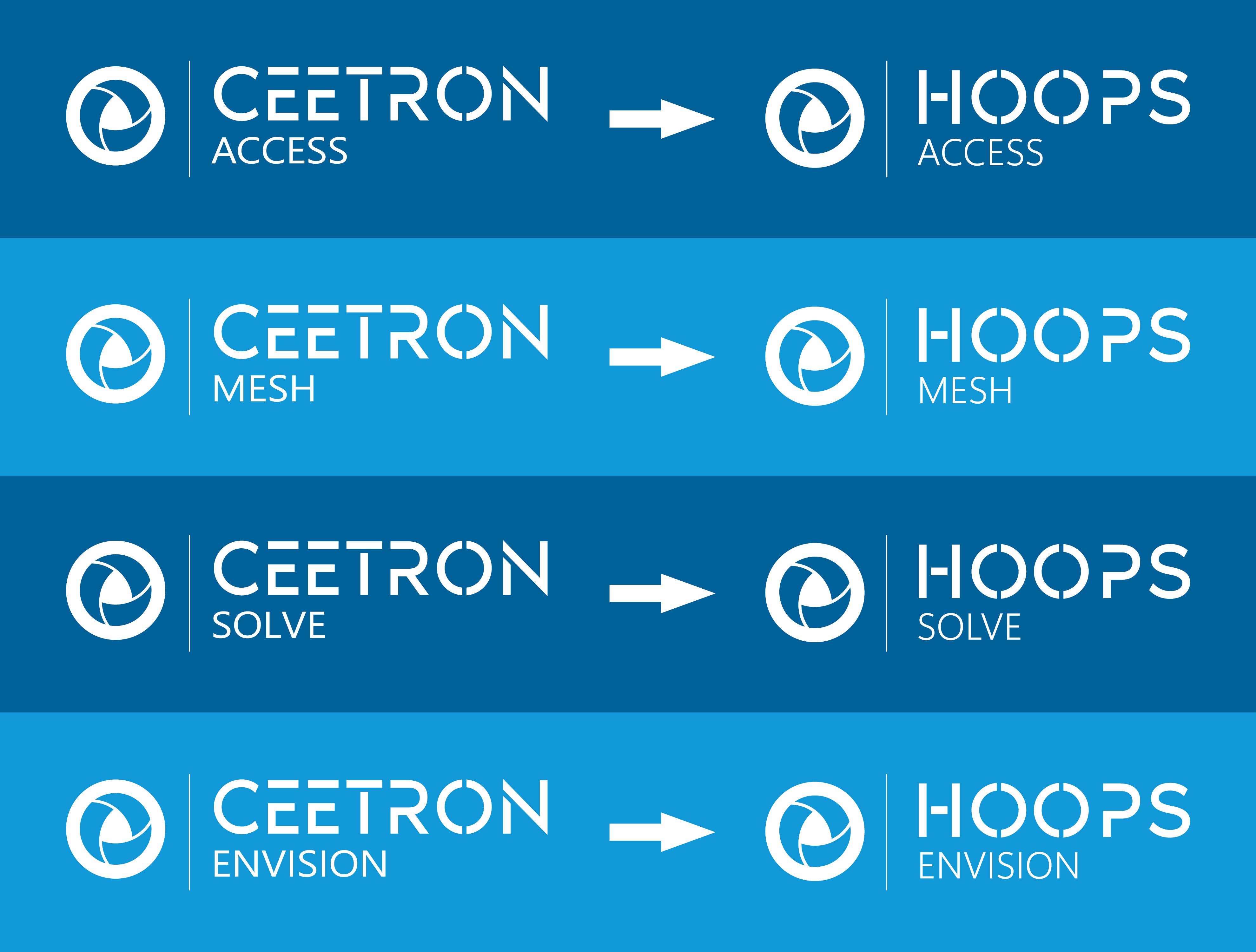
CEETRON Access is now HOOPS Access, CEETRON Mesh is now HOOPS Mesh, CEETRON Solve is now HOOPS Solve, and CEETRON Envision is now HOOPS Envision.